Why the Acropolis matters
The word acropolis simply means "high city", and many Greek cities had one. Athens' rock, however, became the most celebrated sacred precinct in the ancient world. After the Persians sacked the hilltop in 480 BC, the statesman Pericles launched an ambitious rebuilding programme financed largely by the Delian League treasury, and within about forty years the monuments we see today were largely complete.
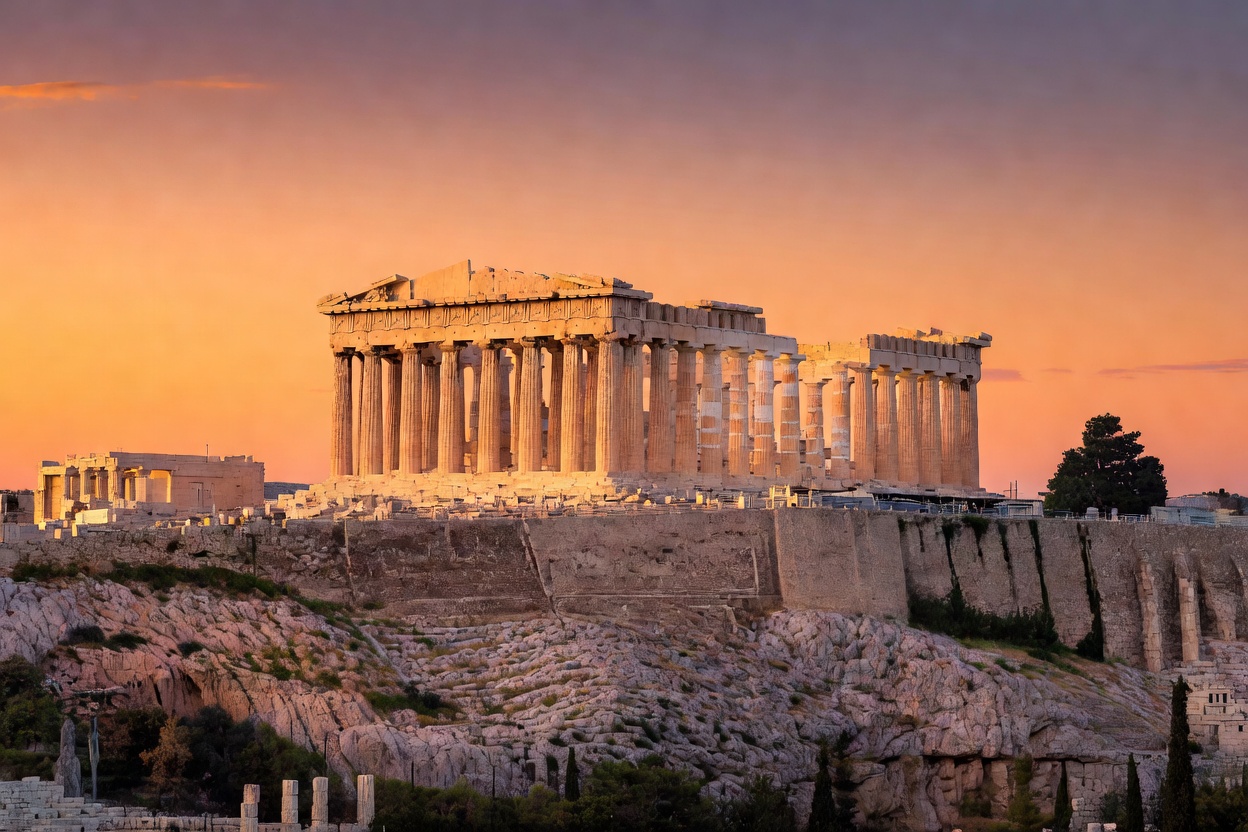
The Parthenon, dedicated to Athena Parthenos, was built between 447 and 432 BC by the architects Iktinos and Kallikrates, with the sculptor Pheidias overseeing its decoration. Its Doric columns carry subtle curves, a refinement known as entasis, which makes the building look perfectly straight and alive to the eye.
What to see on the rock
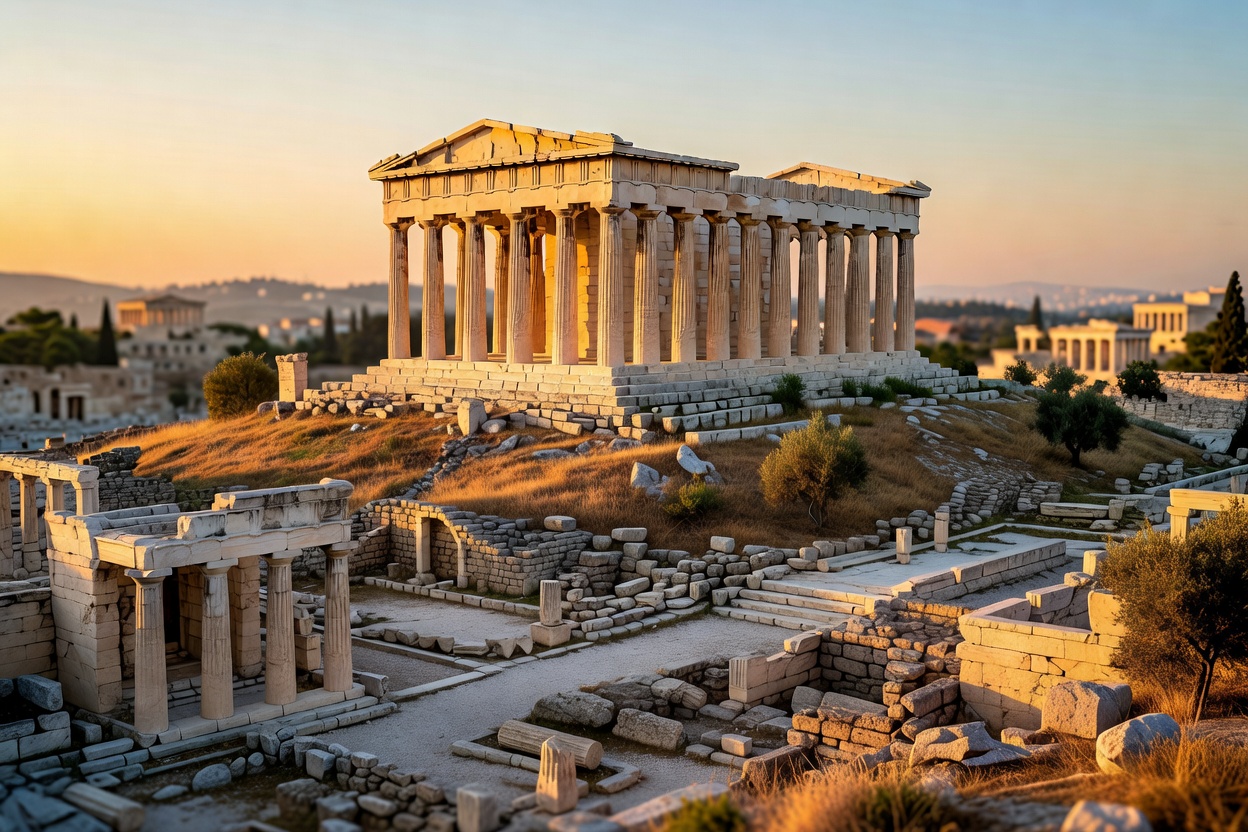
- Propylaia: the monumental gateway designed by Mnesikles and completed around 432 BC.
- Temple of Athena Nike: a small Ionic temple on the bastion, dating to about 420 BC.
- The Parthenon: the largest Doric temple completed in Greece, 69.5 m long and 30.9 m wide on its base.
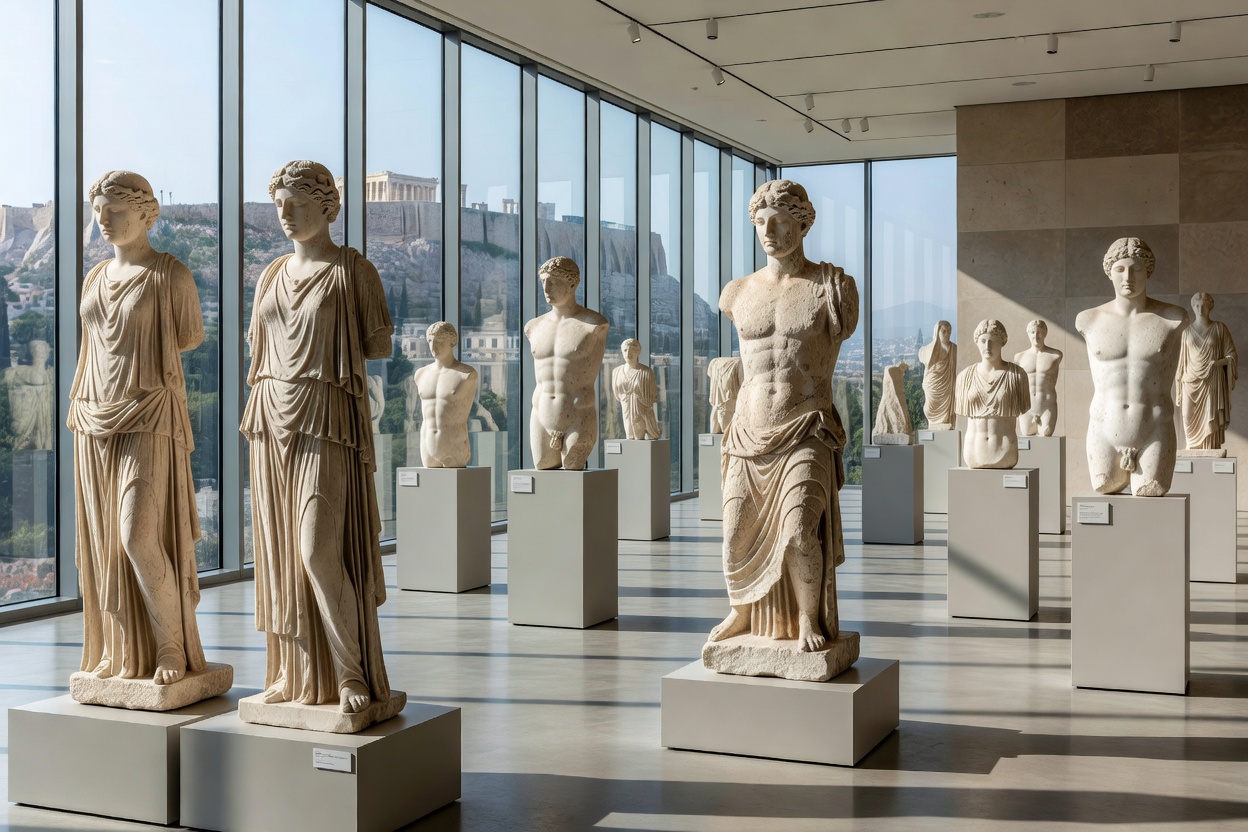
- The Erechtheion: the asymmetrical temple built 421–406 BC, famous for the Porch of the Caryatids (the statues you see today are replicas; originals are in the Acropolis Museum).
- Views: from the edge you can pick out Mount Lycabettus, Philopappos Hill, the Ancient Agora and the Saronic Gulf on clear days.
From temple to ruin
Over the centuries the Parthenon served as a Byzantine church, a Catholic cathedral under the Franks and a mosque under Ottoman rule. In 1687, during a Venetian siege, a shell struck the powder magazine stored inside and the roof and much of the central structure were blown apart. In the early nineteenth century many sculptures were removed by Lord Elgin, and their ownership remains a subject of international debate. Since the 1970s, a large conservation programme has been dismantling, repairing and reassembling the monuments with titanium fixings and original marble where possible.
Information panels
Historical significance
- Inscribed as a UNESCO World Heritage Site in 1987.
- Symbol of the birth of democracy, drama, philosophy and classical architecture.
- Parthenon construction: 447–432 BC; sculptural decoration continued until 432 BC.
- Conservation work by the Acropolis Restoration Service has run for decades and scaffolding is often visible.
Ticket prices
- Standard adult admission: €30 (price introduced in April 2025).
- Reduced admission applies to certain groups, such as eligible students and seniors; carry valid ID.
- Free or discounted entry exists for specific categories and on a handful of designated days each year.
- Tickets are issued for timed entry slots. Buy only through the official Ministry of Culture e-ticket service.
Opening hours
- Summer (roughly April to October): opens at 08:00 and closes in the evening, with last entry shortly before closing.
- Winter: shorter days, with earlier closing times.
- Closed on certain public holidays, including 1 January, 25 March, Orthodox Easter Sunday, 1 May and 25–26 December (some with reduced hours).
- The site may close temporarily during extreme heat, strong winds or rain.
Recommended visiting times
- Best: 08:00 opening slot, with softer light and fewer people.
- Alternative: the last two hours before closing, when light turns golden and crowds thin.
- Avoid 11:00–16:00 from June to September, when marble reflects heat and queues are longest.
- Best seasons: April–May and late September–October.
Nearby landmarks
- Acropolis Museum: five minutes on foot from the south entrance.
- Theatre of Dionysus and the Odeon of Herodes Atticus on the south slope.
- Areopagus Hill, a rocky outcrop with excellent views, and the Ancient Agora below it.
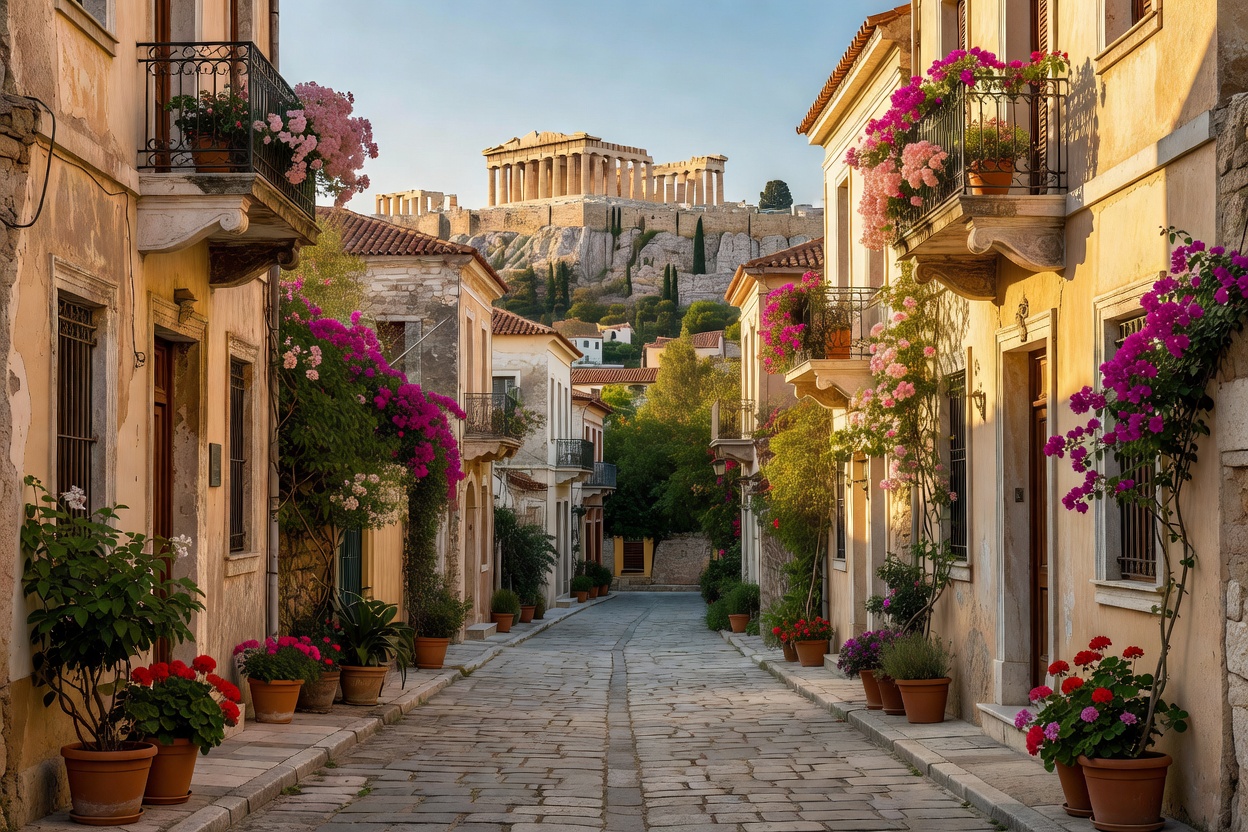
- Plaka and Anafiotika on the north-east slope.
Practical visitor tips
- Wear shoes with grip; the polished marble is very slippery.
- Bring a refillable bottle, sunscreen and a hat; shade is minimal.
- Large bags, tripods and drones are not permitted.
- A lift is available for visitors with reduced mobility; contact the site in advance.
Pros and cons
Highlights
- Unmatched historical and architectural value
- Panoramic views over the whole city
- Short walk from metro and museum
Drawbacks
- Crowded, especially at midday
- Little shade and steep, slippery paths
- Ongoing scaffolding in some views