A museum designed around a view
The Acropolis Museum opened to the public in June 2009 and was designed by the architect Bernard Tschumi with the Greek architect Michael Photiadis. It replaced a small, overcrowded museum on the rock itself and gave Greece a world-class home for the finds from the Acropolis slopes. Its exhibition spaces cover around 14,000 square metres and hold more than 4,000 objects.
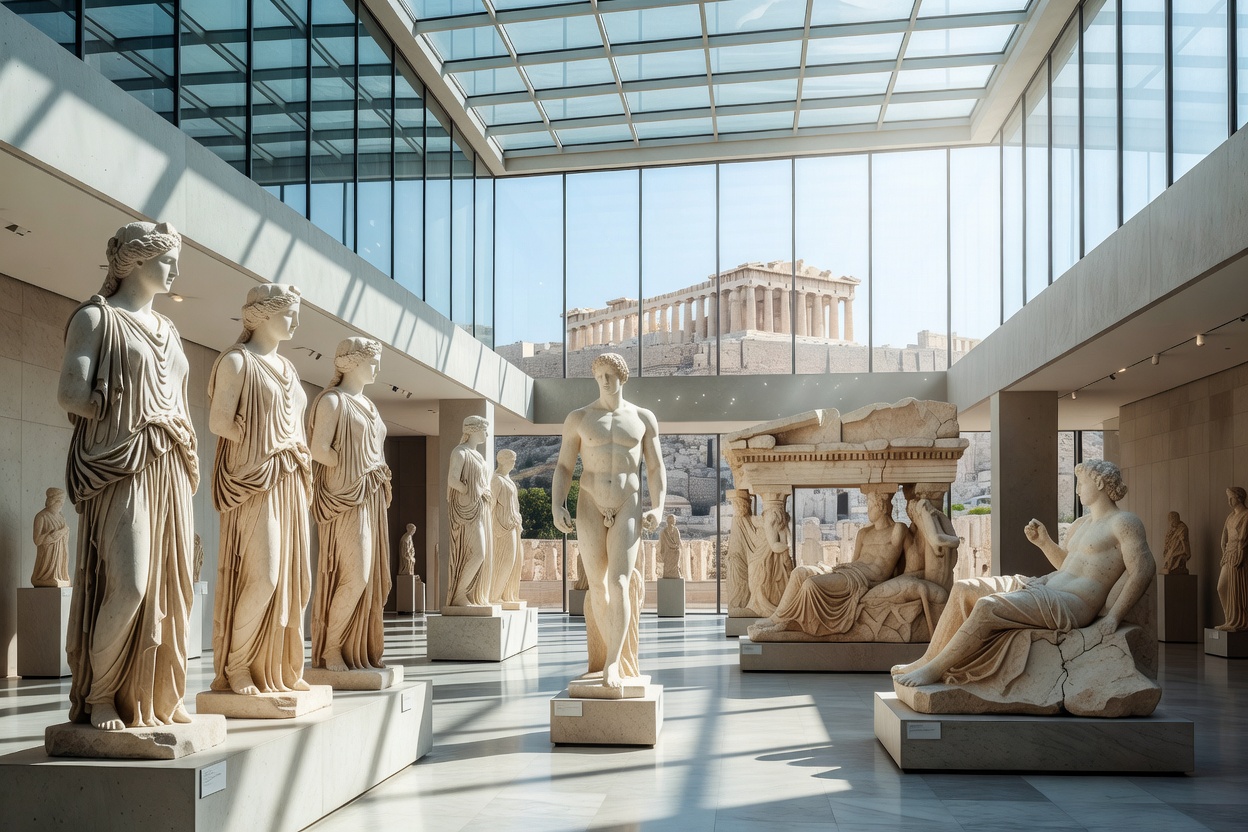
The building is a story in three parts: a base floating above an active excavation, a trapezoidal middle zone with soaring ceilings, and a glass-walled top floor that is rotated to match the exact orientation of the Parthenon.
Galleries not to miss
- The Archaic Gallery: painted marble korai (maiden statues) and early temple pediments, some with traces of original colour.
- The Gallery of the Slopes: finds from sanctuaries and theatres on the south and north slopes.
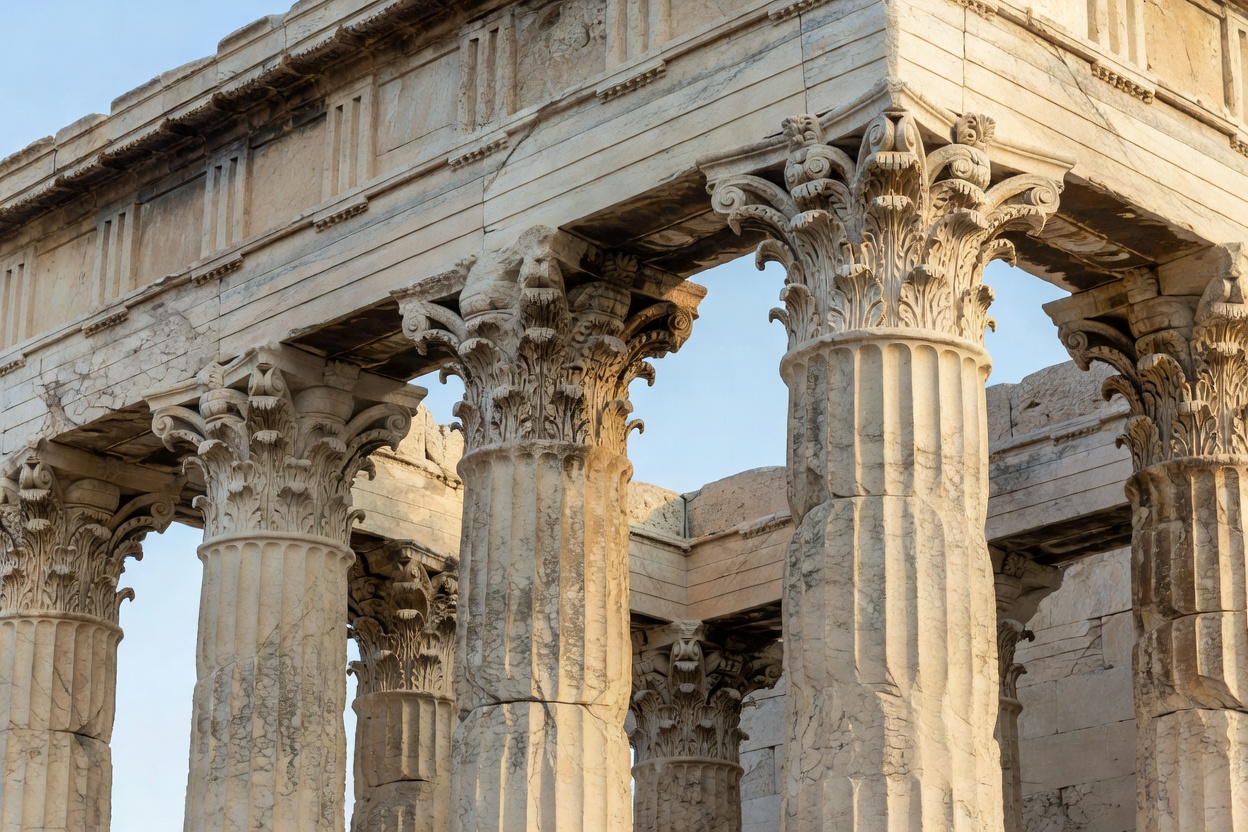
- The Caryatids: five of the six original statues from the Erechtheion porch are displayed here; the sixth is in the British Museum in London.
- The Parthenon Gallery: the 160-metre frieze is displayed around a concrete core matching the temple's dimensions. Original pieces are shown with plaster casts where originals are elsewhere, which makes the story of the sculptures remarkably clear.
- Excavation floor: a glass floor at the entrance lets you look down onto the ruins of an ancient Athenian neighbourhood.
"At the Parthenon Gallery you can look at the frieze, then lift your eyes through the glass and see the temple it came from."
Information panels
Historical significance
- Opened in 2009 after an international design competition.
- Built over the remains of a late-Roman and early-Byzantine neighbourhood, preserved under the building.
- Central to the long-running debate about the reunification of the Parthenon sculptures.
Ticket prices
- Standard admission is around €20 in the main season, with a lower seasonal rate in winter.
- Reduced tickets are available for eligible visitors; free entry applies to certain groups and on selected days.
- Buy online at the official museum website to skip the ticket queue.
- Prices can change; check the official site before you go.
Opening hours
- Open most days, with longer summer hours and a later closing on some evenings.
- Closed on a small number of public holidays, including 25 December and Orthodox Easter Sunday.
- Last entry is typically 30 minutes before closing.
- The Archaeological Excavation level and café have their own hours.
Recommended visiting times
- Midday heat is the ideal time to be inside.
- Late afternoon often has smaller crowds, and the Parthenon glows through the top-floor glass.
- Rainy days and winter weekdays are the quietest.
Nearby landmarks
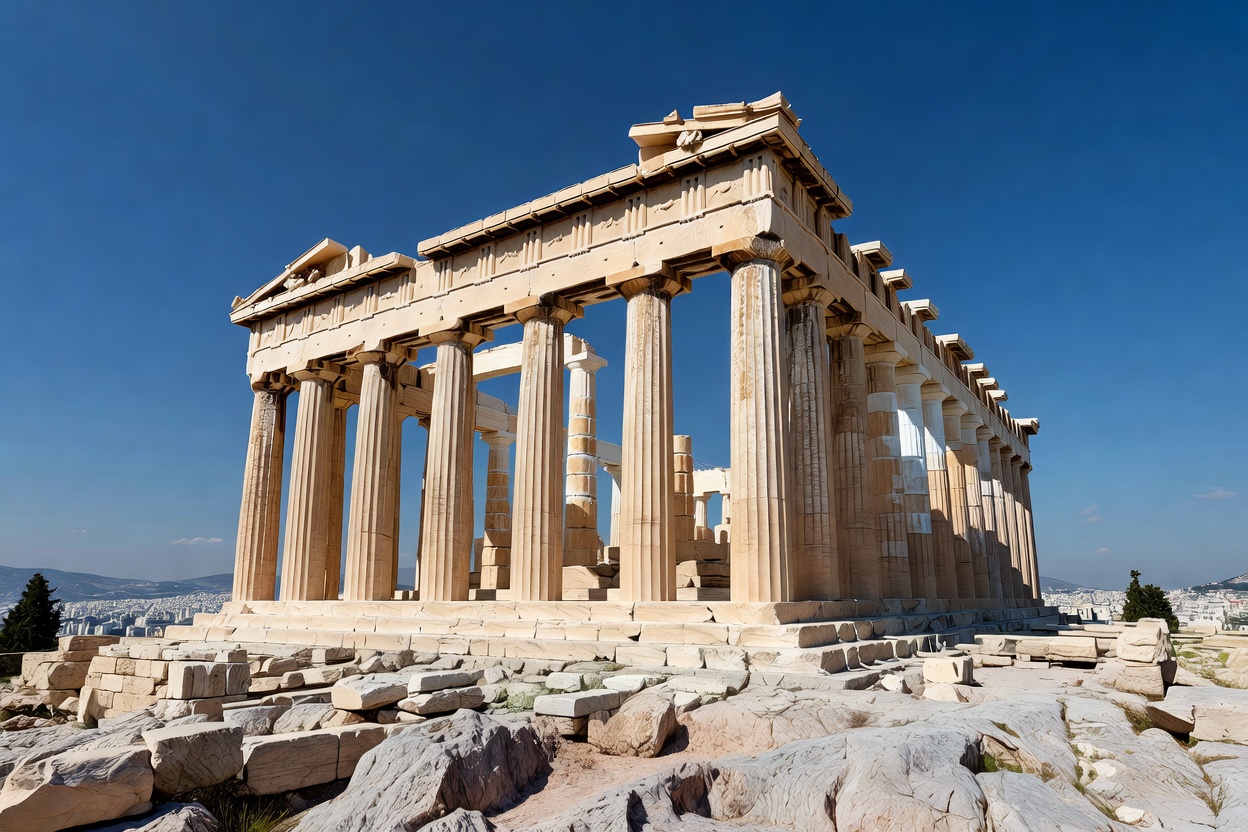
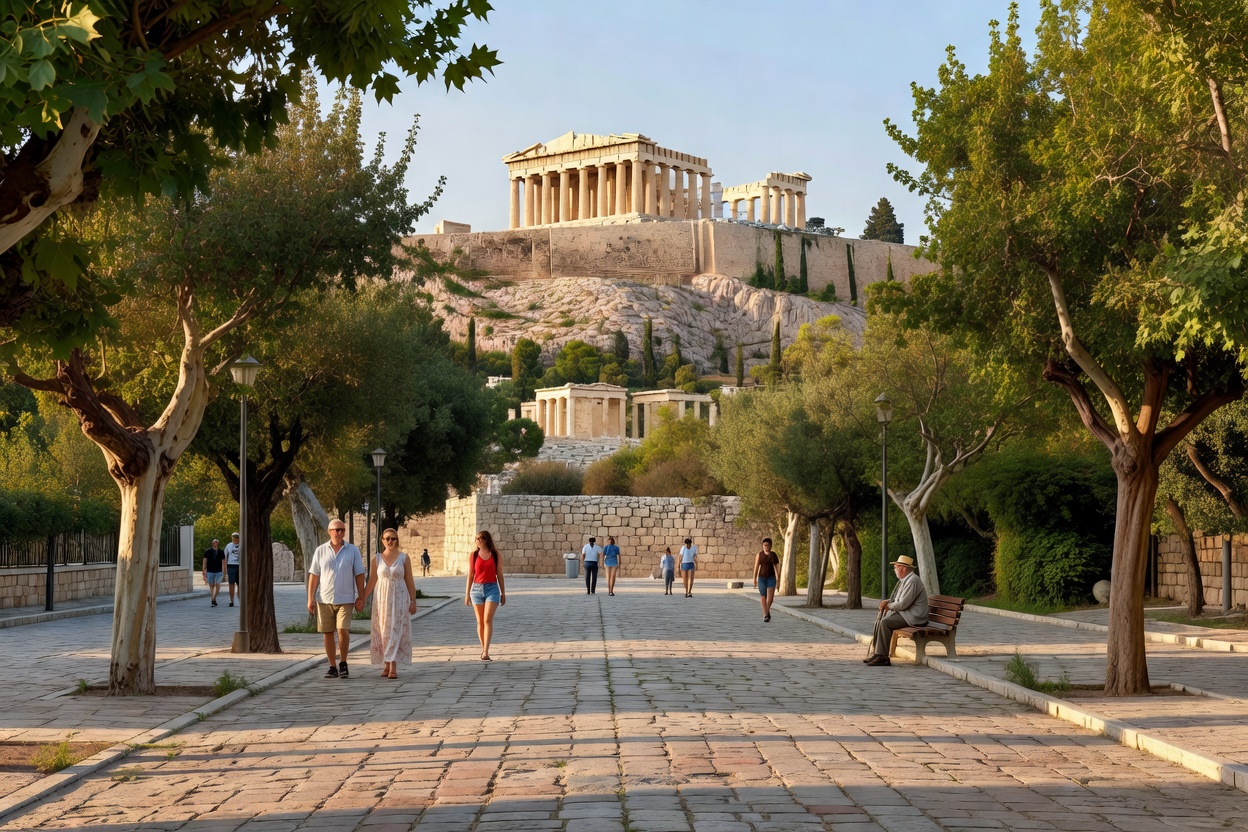
- Acropolis and Parthenon: south slope entrance five minutes away.
- Makrygianni and Dionysiou Areopagitou pedestrian streets.
- Temple of Olympian Zeus: about 10 minutes on foot.
- Plaka lies just to the north.
Practical visitor tips
- Photography is allowed in most galleries without flash; some areas have restrictions.
- Large bags go in the cloakroom.
- The building is fully step-free with lifts, and wheelchairs can be borrowed.
- Have lunch or coffee at the museum restaurant terrace, which looks straight at the Acropolis.
Pros and cons
Highlights
- Cool, comfortable and fully accessible
- Excellent context for the Acropolis visit
- Terrace restaurant with a direct view of the Parthenon
Drawbacks
- Can feel busy in the Parthenon Gallery
- Plaster casts stand in for missing originals
- Ticket price is higher than most Athens sites
Planning tip: Visit the museum after the Acropolis, not before. Having seen the temple, the frieze and metopes become far more meaningful.